Pixel 11 Pro XL vs Galaxy S26 Ultra: Which One Should You Actually Buy?
The Galaxy S26 Ultra has five months of real owner reviews behind it. The Pixel 11 Pro XL lands in shops on 20 August 2026, so right now it only has a spec sheet and a handful of hands-on previews.
Both phones launch at the same €1,299 this generation, a first: last year the Pixel undercut the Galaxy by €100. Closing that gap puts more pressure on the Pixel to prove itself, and early reaction has been mixed. One poll of nearly 15,000 Android Authority readers had 73% call the Pixel 11 series ‘not hot’, mostly over the pricing jump, 12GB RAM on the base Pro configuration and AI fatigue.
None of that settles anything on its own. One phone comes with receipts. The other comes with a promise. Here is the honest comparison: camera, performance, battery and design, plus the question most launch-week guides skip entirely: which one you can buy refurbished today and start saving on immediately.
Quick verdict: Galaxy S26 Ultra or Pixel 11 Pro XL?
Get the Galaxy S26 Ultra if you game, multitask hard, want the S Pen or DeX, or want a flagship you can buy already refurbished. The Galaxy S26 Ultra is in stock now.
Get the Pixel 11 Pro XL if selfies, magnetic accessories or AI-powered camera software matter most to you, and you do not mind paying full price for a phone that only launched yesterday.
Want a Pixel without the launch-price tag? The Pixel 10 Pro XL covers most of the same ground and is already refurbished and in stock.
Price-sensitive right now? The Galaxy S26 Ultra currently has a live discount on top of being the only one of the two available refurbished.
Not sure the launch hype matches reality? You are not alone: that Android Authority poll of nearly 15,000 readers had 73% call the Pixel 11 series ‘not hot’, mostly over pricing and incremental hardware. Worth weighing against the parts of the Pixel that are new to you.
One note before the spec table below: the Pixel 11 Pro XL has no refurbished listing yet, so its figures come straight from Google's own launch materials rather than a refurbed product page.
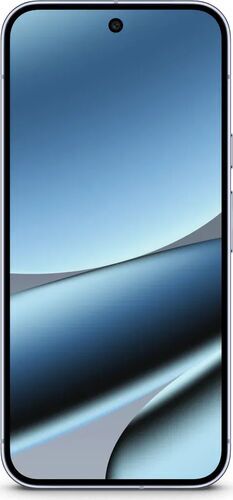
Pixel 11 Pro XL vs Galaxy S26 Ultra: specs side by side

Chip
Snapdragon 8 Elite Gen 5
Front Camera
12 MP
Max Zoom
100x
Battery
5000 mAh
Charging
60W wired
Weight
214 g

vs.
Pixel 11 Pro XL
Tensor G6 (7-core)
42 MP
120x (AI-assisted)
approx. 5100+ mAh
45W wired, 25W magnetic
226 g
Camera showdown: a fishing rod versus a net
The Galaxy S26 Ultra hands you more lenses and more manual control, a proper fishing rod. Four rear cameras, a 200MP main sensor and an extra focal length most phones skip, plus punchier, more detailed daylight footage and colour.
The Pixel 11 Pro XL casts a net instead. Magic Capture analyses hundreds of frames from a burst and picks the best ones for you. It pulls ahead in ultra-wide video, stabilisation and low-light photo brightness, and its 42MP front camera beats the Galaxy's 12MP by a wide margin for selfies.
About that 120x zoom headline: part of it is generative reconstruction rather than optical detail past roughly 30x. One photographer testing the phone chose not to use it for that reason, so treat the number as a party trick, not a promise of real detail at full range.
Magic Capture is built for chaos: kids, pets, dancing, anything that will not sit still for a normal shot. It scans hundreds of frames from a burst and pulls out the ones with a good expression or pose. In a controlled demo it worked convincingly, though that is not proof it holds up in a dim restaurant or chasing a fast-moving dog. Early hands-on testing found the 120x result surprisingly usable, even if keeping a distant subject inside the viewfinder in the first place was the harder part.
Worth knowing before launch-week hype settles: some Galaxy S26 Ultra owners reported soft, blurry 3x telephoto shots. Samsung pushed a software fix, though reports differ on how complete it is, so test that lens yourself during the return window.
Performance and gaming: does the Tensor G6 keep up?
Early Geekbench figures put the Tensor G6's 7-core design behind the Galaxy's Snapdragon 8 Elite Gen 5, and by a wide margin. Take that gap with a pinch of salt though: the comparison mixed Geekbench 6 results for the Galaxy against Geekbench 7 for the Pixel, and the two versions do not score the same workloads the same way. A separate, independent benchmark shared on Reddit pointed the same direction, though a single forum post is not a controlled test either.
Directionally, the pattern still holds. If you game for hours, run demanding apps side by side, or push the phone through sustained, heavy tasks, the Galaxy S26 Ultra is the safer bet for staying smooth under load. For everyday use, browsing, messaging, social media and casual photos, either chip handles the job without drama.
Battery, charging and the magnet question
Despite different cell sizes, both phones should deliver similar real-world battery life: the Galaxy's 5000mAh cell against the Pixel's roughly 5100mAh-plus (sources from the same reviewer even disagree on the exact figure, landing somewhere between 5115 and 5150mAh). On the manufacturers' own efficiency-style ratings, the Galaxy edges it, rated for 55 hours against the Pixel's 50 hours 10 minutes.
The Galaxy charges faster on paper, 60W wired against the Pixel's 45W, and is rated for more cycles before dropping to 80% capacity, 1200 against 1000. Independent lab testing measured 17 hours 52 minutes of continuous Wi-Fi browsing on the Galaxy, and a full charge in under an hour. The Pixel keeps built-in Qi2 magnetic charging out of the box. The Galaxy has none this generation, since the S Pen takes up the internal space a magnet array would otherwise use, so magnetic accessories need a case.
Real-world reports vary widely, which is normal. One long-term Galaxy owner had roughly half the battery left after 5 hours 37 minutes of screen time across two Wi-Fi-heavy days, and over 35% remaining after a day mixing navigation, Android Auto and cellular streaming. Another reviewer averaged 7 to 8 hours of screen time but occasionally ran low by evening. Your own mix of apps, signal strength and screen brightness will matter more than either spec sheet.
Design and everyday feel: concierge or cockpit?
The Pixel is a clever concierge. Fewer controls, calmer stock Android, and a phone that tries to anticipate what you want rather than asking you to configure it. One example: HiLight lets you leave the phone face-down and still recognise a favourite caller or check on Gemini, more porch light than notification centre. At launch it does not surface full message notifications app by app, so it currently promises more than it delivers.
The Galaxy is a cockpit: buttons, modes, an S Pen, DeX for a desktop-style setup, and deep customisation if you want to dig in. That depth comes with more duplicate apps and more Samsung account prompts along the way.
Here is the surprising part. Despite packing a 6.9-inch display and a built-in stylus, the Galaxy S26 Ultra is the lighter, thinner phone this year at 214g and 7.9mm, against the Pixel's 226g and 8.5mm.
The Galaxy's Privacy Display is a genuine first: cover a password, a notification or a chosen app from anyone glancing over your shoulder. Some forum users report eyestrain or fuzzy text linked to its low-frequency dimming, even with the privacy mode switched off, and a smaller number report a reddish or pink tint on their unit. Samsung has not confirmed a cause for either, and most owners, including review units, show neither issue. If you are sensitive to screen flicker or just want peace of mind, spend 10 to 15 minutes with one in store before you decide.
Which should you buy? Pixel 11 Pro XL vs Galaxy S26 Ultra by person
Get the Galaxy S26 Ultra if you game, multitask hard, want the S Pen or DeX for desktop-style work, or want a flagship you can buy already refurbished. Check current stock on the Galaxy S26 Ultra page.
Get the Pixel 11 Pro XL if selfies, magnetic accessories, or AI-driven camera tools like Camera Looks, Magic Capture and simultaneous RAW plus JPEG capture matter most to your everyday shooting. Just know that means paying full launch price, since it is not refurbished anywhere yet.
Skip both for now if you are budget-conscious and still want a Pixel. The Pixel 10 Pro XL refurbished covers most of the same ground today for meaningfully less money, with a warranty attached.
Wary of AI reconstructing your photos for you? That is a fair concern specifically around the Pixel's zoom past 30x, not a reason to rule out the whole phone. Everything else the Pixel does with a photo comes from frames you shot yourself, not filled in afterward.
And if the pricing jump or the ‘not hot’ reaction to the Pixel 11 series has you hesitating either way, that hesitation is doing its job. Buying either flagship refurbished, once it reaches that stage, sidesteps the launch-week premium entirely.
Buying either one refurbished: what you actually gain
Refurbished sits between new and second-hand: every device on refurbed is professionally tested, cleaned and reset, backed by a minimum 12-month warranty and a 30-day trial, so you are not gambling the way you would on a random second-hand listing.
Flagship prices move fast once a refurbished market opens up behind them, and the starting point only climbs each year: this generation both phones launch at €1,299, up from a €100 Pixel discount just last year. In Italy, the Pixel 11 Pro XL launches around EUR1,399 while the Galaxy S26 Ultra 256GB is already listed nearer EUR839 at a discount, the same tier of phone, five months older, for hundreds of euros less. That gap only grows once a phone reaches the refurbished market instead of being bought new at launch.
Right now, the Galaxy S26 Ultra is the one you can buy refurbished today. The Pixel 11 Pro XL cannot be, because it launched too recently for a refurbished market to exist yet. If you want a Pixel without the wait, the Pixel 10 Pro XL is refurbished and available now.
Here is the number worth remembering before the next section: one avoided replacement can outweigh a phone's entire factory-fresh carbon footprint. Buying either phone once it reaches the used or refurbished market matters more than which one produces less carbon on day one.
The environmental cost of a brand-new phone: the boulder and the pebble
Manufacturing is the boulder. Charging is the pebble. For both phones, building the device accounts for 85 to 89% of its entire three-year carbon footprint, so nothing you do with the charger afterwards moves the number much.
By each manufacturer's own published figures, the Pixel 11 Pro XL carries a three-year footprint of about 81kg CO2e, roughly 68.9kg of that from production alone. The Galaxy S26 Ultra reports about 47.8kg CO2e overall, roughly 42.6kg from production, some 38 to 41% lower than the Pixel. The two reports use different methodologies and electricity assumptions though, so treat that gap as directional rather than a lab-grade fact.
Neither line is heading cleanly downward, either. Google's own reports show 73kg for the Pixel 9 Pro XL, 89kg for the Pixel 10 Pro XL, then 81kg for the Pixel 11 Pro XL: better than last year, still above the Pixel 9. Samsung moved from 48.9kg to 47.8kg across the same two generations, essentially flat. The Pixel 11 Pro XL also carries a Silver UL ECOLOGO rating this year, down from Gold on the Pixel 10 Pro XL, a downgrade Google has not explained.
It is not a clean win for Samsung once you look past carbon. The Pixel uses far more recycled material, at least 33% of its weight against Samsung's 17.7%, including a fully recycled aluminium frame. It also scores better on the EU repairability index, class B at 3.71 against the Galaxy's class C at 3.08. The Galaxy pushes back with a longer battery life, 1200 charge cycles to 80% capacity against the Pixel's 1000, and a harder, more scratch-resistant screen, Mohs 6 against Mohs 4. An early independent teardown scored the Galaxy S26 Ultra 5 out of 10 for repairability: the battery and USB-C port come out reasonably easily, but replacing the display destroyed the test unit's panel and is quoted at €399. No independent teardown score exists yet for the Pixel 11 Pro XL.
None of these percentages matter as much as the actual lever available to you. Already have a working flagship? Keeping it beats buying either one of these new. If you are buying regardless, choosing either phone once it is used or refurbished skips the boulder entirely, which counts for more than any gap between two brand-new footprints. That is the real math behind buying used instead of new. See what is in stock now.
Pixel 11 Pro XL vs Galaxy S26 Ultra: FAQs
Is the Pixel 11 Pro XL available refurbished yet?
No. It launched on 20 August 2026, and refurbished stock only becomes available once enough units have been used, tested and returned. The Pixel 10 Pro XL is the current refurbished Pixel option in the meantime.
Which phone has the better camera?
Neither, outright. The Pixel wins on ultra-wide video, stabilisation, low-light photos and selfies. The Galaxy wins on daylight detail, colour and lens variety. The right answer depends on what you shoot most.
Is the Galaxy S26 Ultra's 3x camera issue fixed?
Samsung acknowledged the soft, blurry 3x telephoto shots some owners reported and released a software fix. Reports differ on how complete it is, so test that lens yourself during your return window.
Which phone is more environmentally friendly to produce?
It depends what you weigh most. The Galaxy S26 Ultra reports a lower carbon footprint. The Pixel 11 Pro XL uses more recycled material and scores better on repairability. Buying either one refurbished beats a brand-new unit of either.
Is the Pixel 11 series actually well received?
Reaction so far is mixed. A poll of nearly 15,000 Android Authority readers had 73% call the series ‘not hot’, largely over the price rise and modest hardware gains, though the poll ran inside a critical article, so treat the exact number with caution.
Should I wait for the Pixel 11 Pro XL refurbished or buy the Galaxy S26 Ultra refurbished now?
If you want a flagship with real ownership history behind it today, the Galaxy S26 Ultra already has both. The Pixel 11 Pro XL is still a promise on a spec sheet until it earns its own track record.

Sign up for our newsletter!
Never miss an offer again.
Information about the use of personal data can be found in our Privacy policy.
Get the refurbed app
For iOS and Android


Confirm sign-up
Almost done: We’ve sent you a confirmation email
- © Refurbed Marketplace GmbH
- Accessibility
- T&C
- Privacy Policy
- Imprint
- Legal Notices
- European Data Act
- Cookie Policy